












Vented, Condenser or Heat Pump Dryer: What's the Difference?
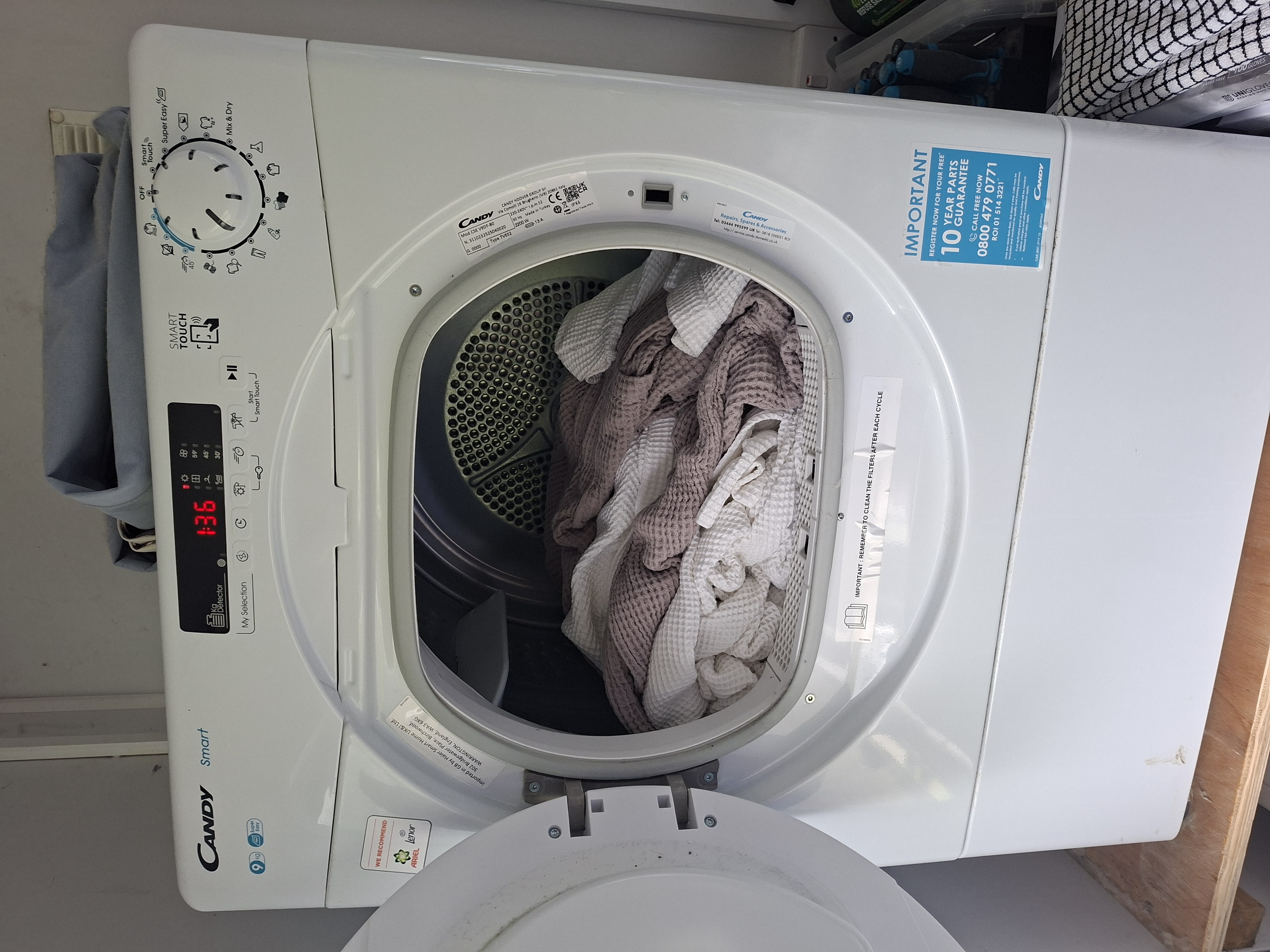
If you're shopping for a new dryer or trying to work out why yours is struggling, it helps to know which kind you've got. The three main types of tumble dryer (vented, condenser and heat pump) all get your washing dry, but they do it in different ways, cost different amounts to run, and ask for different bits of maintenance. Get the upkeep wrong and any of them will dry slowly, run repeatedly and cost you money on your energy bill.
Here's a plain-English rundown of how each one works, what to expect on running costs, and the jobs you need to stay on top of to keep them performing.
The three types of tumble dryer at a glance
| Type | How it gets rid of moisture | Needs an outside wall or vent? | Main maintenance jobs |
|---|---|---|---|
| Vented | Pushes warm, damp air out through a hose | Yes, hose vents to outside | Clean the lint filter, keep the vent hose clear |
| Condenser | Turns the damp air back into water and collects it | No | Empty the water tank, clean the filter, clean the condenser |
| Heat pump | A type of condenser dryer that recycles heat at lower temperatures | No | Empty the water tank, clean the filter, clean the heat exchanger/condenser |
Vented tumble dryers
A vented dryer is the most straightforward design. It heats the air inside the drum, that air picks up moisture from your washing, and then it's blown out of the machine through a hose. The hose usually runs to an open window, an air brick or a hole in an outside wall.
Because the damp air simply leaves the building, there's no water tank to empty and no condenser to clean. The trade-off is that you need somewhere to send the air, so vented models suit a garage, utility room or anywhere with an outside wall nearby.
Maintenance to keep on top of:
- Clean the lint filter after every load. A clogged filter is the single most common reason a vented dryer takes longer than it should.
- Keep the vent hose clear and free of kinks. If lint builds up in the hose or it gets squashed behind the machine, the damp air can't escape and drying times shoot up.
Condenser tumble dryers
A condenser dryer keeps everything inside the machine. Instead of blowing damp air outside, it passes that air through a condenser, which cools it and turns the moisture back into water. That water is collected in a removable tank (sometimes called the water tray), which you empty by hand, or it's plumbed away to a drain.
This is why condenser models can go almost anywhere in the home, with no need for an outside wall. The downside is that they have an extra component to look after, and it's the part people forget about most.
How the condenser actually works
Warm air travels through the filter first, then through the condenser, moving from the front of the machine towards the back. The condenser cools that air so the moisture turns back into water. If the front of the condenser is blocked with lint, the warm air can't pass through it, which means it can't be condensed back into water. The result is washing that stays damp and a dryer that has to run two or three times to finish a single load.
Why it matters for your bills
Tumble dryers use a very high heating element, so they can be costly to run at the best of times. Running the machine several times over to dry one load uses a large amount of energy, so a blocked condenser hits you twice: longer cycles and a bigger bill.
Maintenance to keep on top of
Most people know to empty the water tank and clean the filter, since those are obvious. The condenser is the one that slips under the radar. We'd recommend cleaning and maintaining it at least once a month.
Here's how to check and clean it:
- Open the compartment at the front of the machine to reach the condenser. It's usually near the bottom and either folds down or opens on hinges.
- There are often clips holding the condenser in place. Move these to the unlocked position and pull the condensing unit out.
- To check for blockages, look down the back of the unit while shining a torch at the front.
- To clear any blockages, use pressurised water. Water from your kitchen sink works well: if the tap is tall enough, hold the back of the unit underneath so water flows towards the front. If your tap is too low, an outside tap, a hosepipe or even a shower does the job. The key thing is that the water always flows from the back of the condensing unit towards the front.
- Put the condenser back into the machine.
- Keep this up regularly and your dryer will run efficiently.
For a more detailed walkthrough, see our guide on how to maintain a condenser tumble dryer. It's also worth reading up on tumble dryer water container faults, since a full or poorly seated tank causes its own set of problems.
Heat pump tumble dryers
A heat pump dryer is a clever variation on the condenser design. It still collects the moisture as water rather than venting it outside, so you've got a tank to empty (or a drain connection). The difference is in how it heats and reuses the air.
Rather than constantly heating fresh air and throwing the warmth away, a heat pump recycles the heat inside the machine and dries at lower temperatures. Gentler heat is kinder to fabrics and uses less energy, which is why heat pump models are popular with anyone watching their running costs. The trade-off is that cycles tend to take longer because the temperatures are lower.
Maintenance to keep on top of:
- Clean the lint filter after each load, just as you would with any dryer.
- Empty the water tank regularly, or check the drain connection if it's plumbed in.
- Keep the heat exchanger or condenser clean. As with a standard condenser model, lint that builds up here stops the air flowing properly and leads to longer drying times.
So which type is right for you?
It comes down to where the machine will live and what you care about most:
- If you've got an outside wall or window to vent to and you want simple, low-maintenance drying, a vented dryer is hard to fault.
- If you need flexibility on where the dryer sits and don't mind emptying a water tank, a condenser model is a sensible middle ground.
- If keeping energy use down is the priority and you can live with longer cycles, a heat pump dryer is worth a look.
Whatever you choose, the pattern is the same: keep the filter clean, deal with whatever the machine uses to manage moisture (the vent hose, the water tank or the condenser), and you'll avoid most of the slow-drying complaints we get called out for.
When to call in an engineer
If you've cleaned the filter, emptied the tank and cleared the condenser or vent and your dryer still dries slowly, refuses to heat, or keeps stopping mid-cycle, there's likely a fault that needs looking at properly. Common culprits include a failed heating element, thermostat or sensor, and these aren't jobs to guess your way through.
NAC engineers are fully trained to repair tumble dryers of any make, whether it's vented, condenser or heat pump. We quote a service charge before an engineer attends, which covers all labour, the callout and VAT where it applies. If parts are needed, we'll quote those separately before any work goes ahead, and there's no extra labour charge on top. Every repair comes with a guarantee, with the length depending on the parts fitted and covered under our terms and conditions.
To get your dryer looked at, get in touch with our team or use the Book A Repair button on our website. You can also call us on 0333 016 9622. NAC is a Gas Safe Registered Company (560786).
- tumble dryer
- buying guide
- heat pump
- condenser
- vented
Rather leave it to us?
- Fixed-price quote before any work starts
- Same or next-day visits where available
- UK-wide engineer coverage