












Dishwasher Water Hardness Setting: How to Get It Right
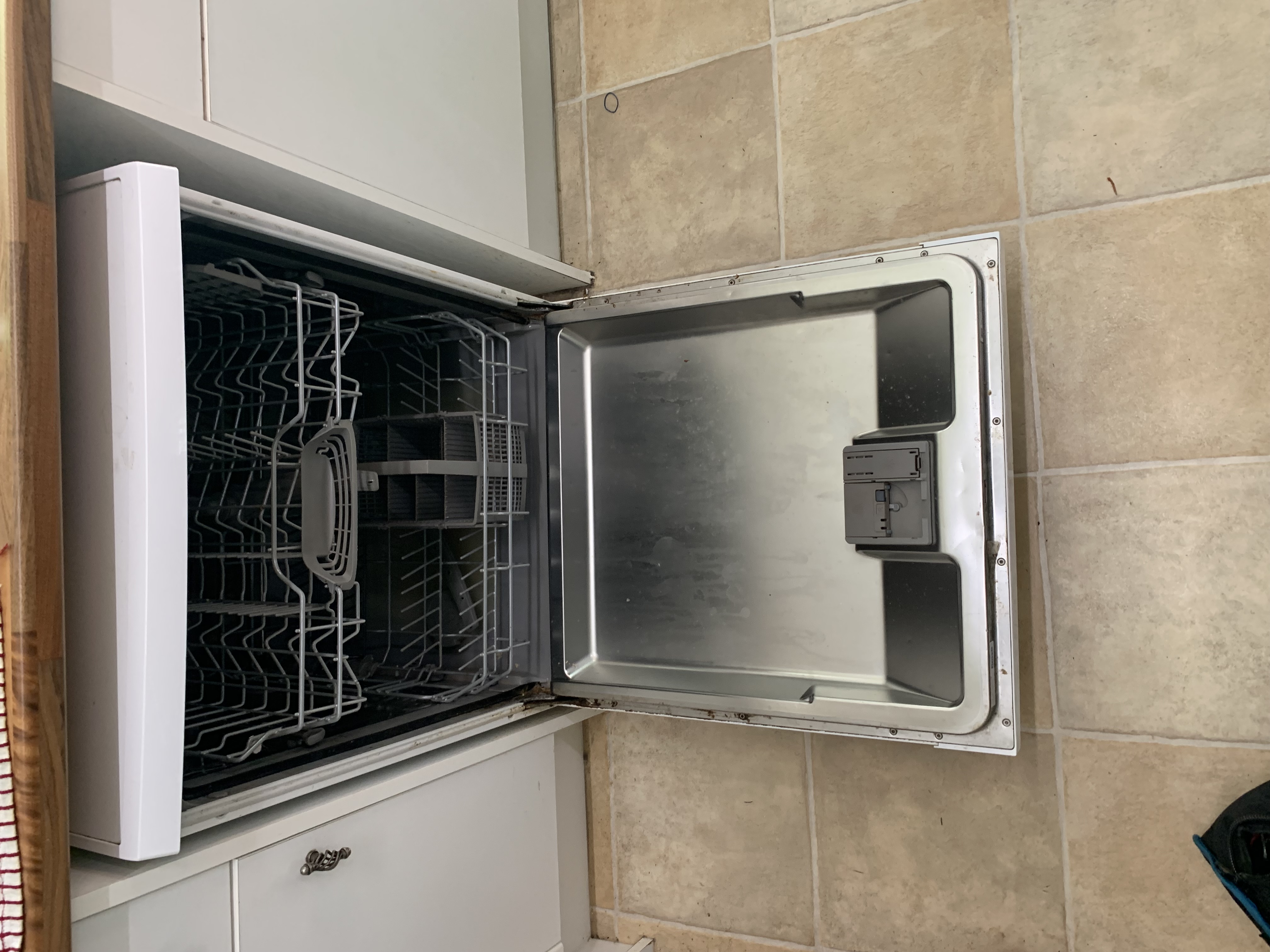
If your dishes are coming out wet, or you keep finding too much foam inside the machine, the dishwasher water hardness setting is one of the first things worth checking. It's a small adjustment that most people never touch after installation, yet it has a direct effect on how well your dishwasher dries and how much rinse aid it uses on every cycle.
Here's the simple version: the water hardness setting tells the machine how much rinse aid to release. Get it wrong in one direction and you'll see excess foam. Get it wrong in the other and your crockery comes out damp. Below we'll explain why that happens, how drying actually works, and how to set the hardness level to match the water where you live.
How dishwasher drying really works
Drying isn't a separate blast of hot air like a tumble dryer. During the rinse and dry phase, the dishwasher heats everything inside: the cabinet, the inner carcass, glassware, ceramics and metal items. It's the heat trapped inside those items that does the drying once the cycle ends.
That's why what you do at the end of the programme matters so much:
- Leave the door open slightly for a short while once the cycle finishes. This lets the steam escape and helps everything cool quickly, which is what completes the drying.
- If you leave the door shut for a long time, the trapped heat cools and condenses back into water. Items that were drying nicely end up wet again.
- Plastic items are the exception. Plastic doesn't hold heat the way glass, ceramic and metal do, so plastic tubs and lids stay wet at the end of a cycle. They'll be clean, but they will always come out damp. That's normal, not a fault.
Some higher-end dishwashers open the door automatically at the end of a programme to help with this. Many don't, so you'll need to crack the door open yourself.
Where rinse aid comes in
Rinse aid does more than add a shine. It breaks the surface tension of the water so that, together with the trapped heat, water doesn't cling to your dishes. Instead it runs off in large sheets, leaving items far drier.
A few things worth knowing about rinse aid:
- Use it as a separate product rather than relying on an all-in-one combined tablet. A dedicated rinse aid compartment gives far better drying results.
- A top-up isn't used all in one wash. Once you've filled the dispenser, it usually lasts several weeks or even months.
- Running low on rinse aid is a common reason for poor drying.
Why the water hardness setting controls everything
This is the part most people miss. The water hardness setting decides how much rinse aid the machine dispenses on each cycle. It's there because hard water and soft water behave differently, and the machine needs to compensate.
- Set too high (too much rinse aid dispensed): you get excess foam, an oversudding problem where far too much foam builds up inside the machine.
- Set too low (too little rinse aid dispensed): there isn't enough rinse aid to break the surface tension, so you get drying problems and damp dishes.
So if you're chasing better drying, simply pouring in more rinse aid isn't the answer. You need the hardness setting to match your actual water supply.
How to find your local water hardness
Water hardness varies a lot across the UK. Hard water areas have higher levels of dissolved minerals; soft water areas have far less. To set your machine correctly you need to know roughly which you're in. Your local water supplier publishes the hardness for your postcode area, usually on their website, and that figure is what you match to the scale on your dishwasher.
Manufacturers use their own hardness scale in the menu (often a numbered range from soft to very hard), so once you know your local figure, set the machine to the level that corresponds to it. The exact numbers and how they're labelled differ between makes and models, so check the manual for your machine.
How to adjust the water hardness setting
The setting normally lives in the dishwasher's programme or settings menu, or behind a small button combination on older models. Your appliance manual will show the exact steps for your model. Once you've found it, change it to the level that matches your area, then save and run a normal cycle to see the difference.
If drying still isn't right after adjusting it, double-check the rinse aid dispenser is topped up and being used.
How to top up rinse aid the right way
Keeping the dispenser filled goes hand in hand with the hardness setting. Here's the proper way to do it:
- Open the dishwasher, lay the door flat and find the dispenser on the inside of the door.
- Open the rinse aid cap and pour rinse aid into the compartment. Remember it won't all be used in one wash and can last several weeks or months.
- Wipe away any spilled rinse aid from around the outside of the compartment with a cloth. Too much rinse aid loose inside the machine causes an oversudding (excess foam) problem.
- Make sure the water hardness setting is correct, because that controls how much rinse aid is dispensed. Too much creates excess foam; too little creates drying problems.
Common causes of poor drying, at a glance
- The door being left closed at the end of a cycle, so trapped heat condenses back into water.
- Plastic items staying wet because plastic doesn't trap heat.
- Not enough rinse aid in the dispenser.
- An incorrect water hardness setting dispensing too little rinse aid.
Simple habits that improve drying
- Open the door slightly when the cycle finishes to let the steam out and help items cool.
- Avoid running the dishwasher overnight or while you're out for hours, since the door stays shut and everything re-wets.
- If your machine has an automatic door-opening feature, make use of it; if it doesn't, open the door yourself.
- Stick with a separate rinse aid rather than depending on a combined tablet.
When to call in an engineer
If you've matched the hardness setting to your local water, topped up the rinse aid, and you're still getting damp dishes or persistent foam, there may be an underlying fault worth investigating. Our engineers repair all makes and models, and we'll quote a service charge upfront covering all labour, callout and VAT where applicable. If any parts are needed, we'll quote those separately before we carry out any work, and repairs come with a guarantee under our terms and conditions.
You can book a repair online using the Book A Repair button on our website, or call us on 0333 016 9622. Take a look at the appliances and services we cover and the brands we repair to see how we can help.
For more straightforward fixes around the home, browse the rest of our help and advice articles.
- water hardness
- dishwasher settings
- limescale
- rinse aid
Rather leave it to us?
- Fixed-price quote before any work starts
- Same or next-day visits where available
- UK-wide engineer coverage