












Dishwasher Rinse Aid: What It Does & When to Top It Up
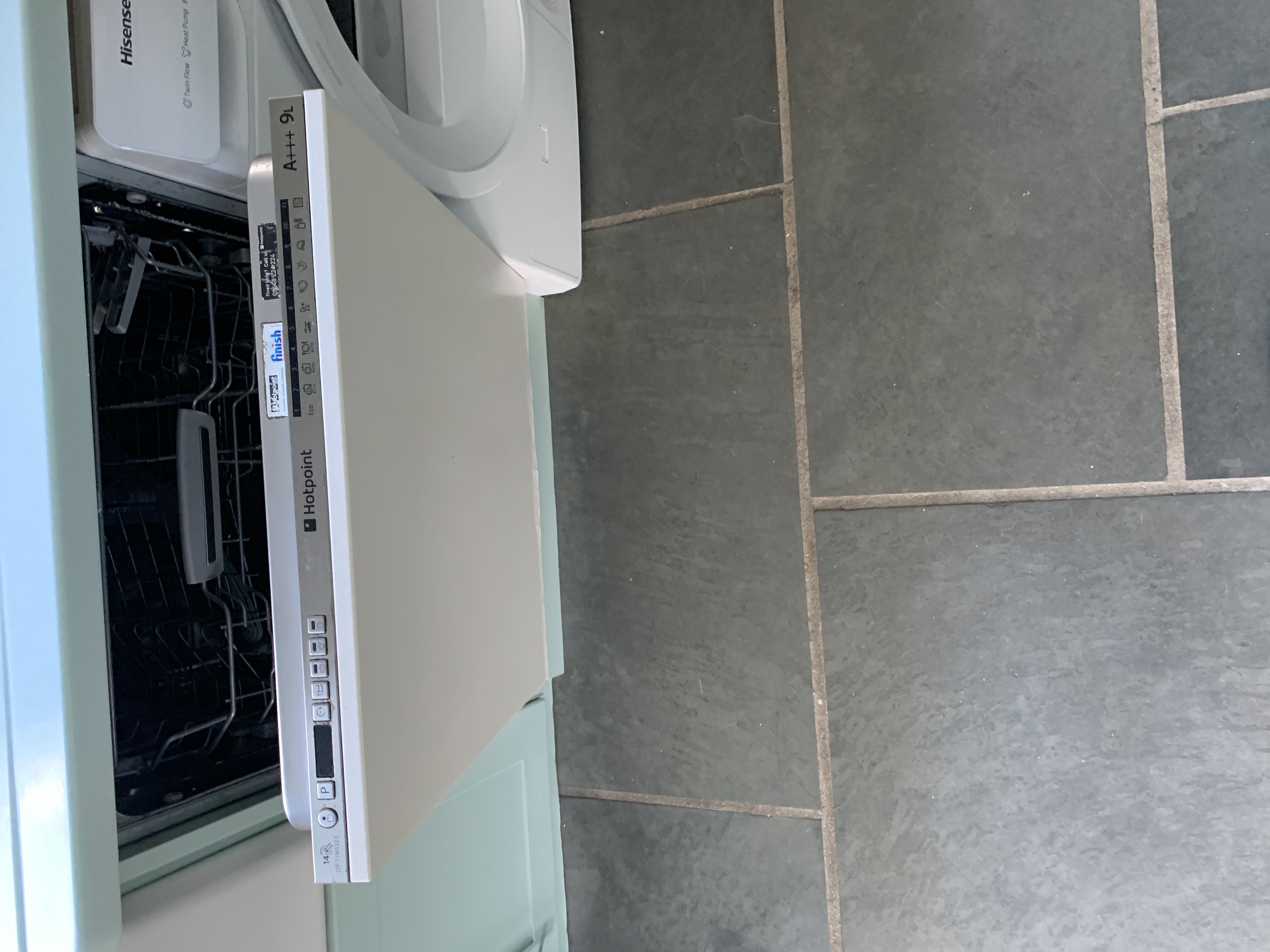
Dishwasher rinse aid is one of those things people pour in without ever really knowing what it's for. It sits in its own little compartment next to the detergent, quietly doing its job, until the day it runs out and your glasses come out spotty and damp. This guide explains what rinse aid actually does, how to refill the dispenser, how to adjust the dose, and what that low-level warning light is telling you.
What dishwasher rinse aid does
Rinse aid is added during the final rinse to help water run off your crockery and glassware rather than clinging to it in droplets. When water beads up on a surface and then dries in place, it leaves behind those familiar spots and cloudy marks, particularly on glass. Rinse aid encourages the water to sheet off instead, so plates and glasses dry faster and come out cleaner looking.
It's a separate product from detergent and from dishwasher salt, even though all three work towards the same goal of good washing and drying results. You'll find it in combined tablets too, which we'll come to next.
Rinse aid and 3-in-1 tablets
A lot of modern dishwasher tablets are sold as 3-in-1, which means they combine three components in a single product:
- Detergent
- Salt
- Rinse aid
That sounds convenient, and it can be, but there's an important catch. Relying solely on 3-in-1 tablets is only recommended if you live in an area of perfect soft water.
If your water is hard and contains any form of limescale, it's not a good idea to depend on combined tablets alone. In that situation you should still add dishwasher salt separately, on top of using your tablets. The rinse aid included in a 3-in-1 tablet simply isn't enough on its own to deal with the demands of hard water.
How soft water affects your results
Dishwashers, like washing machines, always perform best in soft water. That's why a dishwasher has its own built-in water-softening system. The salt chamber turns hard water into soft water, provided you keep dishwasher salt topped up.
It's worth knowing that the salt itself doesn't soften the water directly. Inside the salt chamber there's a special resin that does the softening, and the salt's job is to clean and regenerate that resin so it can keep working. Get this part right and your rinse aid has a much easier job producing spot-free, well-dried dishes.
If your settings are off, you can actually end up with too much salt in the machine. A tell-tale sign is small drop marks left on items, especially glassware. On most modern machines you adjust the water hardness using the controls on the front. Some high-end models ask you to enter an exact hardness value, and the best way to get that figure is to ask your local water authority.
How to refill the rinse aid dispenser
The rinse aid reservoir is usually built into the inside of the door, next to the detergent compartment, with its own flip-up or twist cap.
- Open the cap on the rinse aid compartment.
- Pour rinse aid in slowly until it reaches the full mark, taking care not to overfill.
- Wipe away any spills around the opening, as excess rinse aid on the door can cause foaming.
- Close the cap firmly so it clicks shut.
A single fill typically lasts through many cycles, so this isn't a job you'll be doing every wash.
Adjusting the rinse aid dose
Many dishwashers let you change how much rinse aid is released per cycle, usually via a numbered dial inside the dispenser or a setting in the control panel. If you're seeing:
- Spots and water marks on glasses: try increasing the dose so more rinse aid is released.
- Streaks, a filmy haze or foaming: try reducing the dose, as too much rinse aid can leave its own residue.
Make one adjustment at a time and run a normal cycle to judge the difference before changing it again.
Understanding the low-level warning light
Most machines have a warning light on the front to flag when supplies are running low. This light comes on when either the dishwasher salt or the rinse aid reaches a low level, telling you it's time to replenish them.
Because the same style of indicator often covers both salt and rinse aid (sometimes as two separate symbols), check which one is showing. Top up whichever has run low and the light should clear once levels are back up and the machine has run a cycle.
When poor results aren't down to rinse aid
If you've refilled the rinse aid, kept your salt topped up, set the water hardness correctly and you're still getting poor washing or drying quality, the problem may not be down to your consumables at all. At that point there could be a genuine fault with the appliance.
We repair dishwashers of any make. With NAC you're given a service charge before an engineer attends, and that covers all labour, the callout and VAT where it applies. The only possible extra is for parts, and if any are needed we'll quote those separately before doing the work, with no additional labour charge added on top. Repairs come with a guarantee, the length of which depends on the parts fitted and is set out in our terms and conditions.
You can book through the Book A Repair button on our website, or call us on 0333 016 9622. Take a look at the brands we repair and our service areas, or get in touch if you'd like to talk it through first.
Keep the salt and rinse aid topped up, set your water hardness to match your supply, and most spotting and drying complaints sort themselves out. When they don't, that's what we're here for.
- rinse aid
- drying
- dishwasher maintenance
- warning light
Rather leave it to us?
- Fixed-price quote before any work starts
- Same or next-day visits where available
- UK-wide engineer coverage