











Why Your Oven Takes Too Long to Cook Food
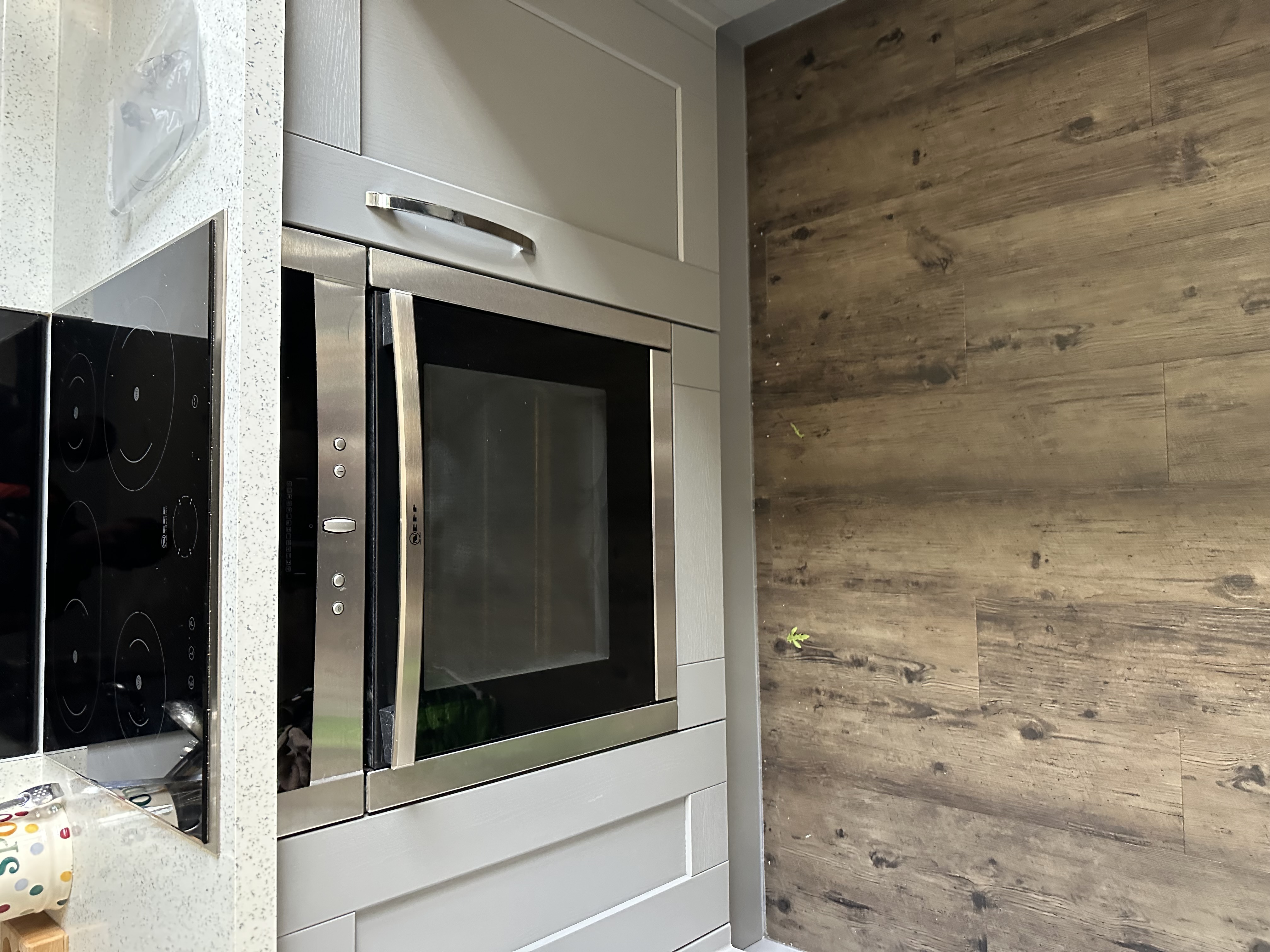
If your oven is not cooking food properly, taking far longer than the recipe says or leaving the middle of a roast pale while the edges catch, the heat is either not reaching the right level or it's escaping before it can do its job. It's one of the most common complaints we hear, and the good news is that the cause is usually one of a handful of parts. Some of those you can sort yourself. Others are better left to an engineer.
Below we'll walk through the usual suspects, what each one does to your cooking, and how to tell a quick DIY fix from a job worth booking.
How to spot an oven that isn't heating properly
Before you blame any one part, look at the pattern of the problem. It often points straight at the cause.
- Food browns unevenly, or one side cooks faster than the other.
- Dishes take noticeably longer than they used to, with no change in your recipes.
- The outside of a joint or cake cooks while the centre stays underdone.
- You can feel warm air leaking around the closed door.
- The oven never quite reaches temperature, or the heat seems to come and go.
Keep those symptoms in mind as we go through each likely culprit.
A worn or damaged door seal
This is the cause people overlook most, and it's often the easiest to put right. The door seal (the flexible strip running around the oven door opening) keeps hot air sealed inside the cavity. Once it hardens, splits or starts falling away from the corners, heat escapes every time the oven is on. The result is longer cooking times, uneven results and an oven that struggles to hold temperature.
The seal is usually made from temperature-resistant silicone or rubber. It has a small hook in each corner that anchors it to the door, and you'll see a visible join where two lengths of the seal have been joined together.
Replacing one sits comfortably within most people's skill set, and the method is much the same across most brands. Here's how it's done:
- Get the orientation right first. Position the new seal so the join sits at the bottom of the door. Heat rises, so there's always a chance the join could break over time. If that happens with the join at the bottom, it causes far less trouble than a broken join at the top.
- Hook it into place. Insert the hooks one by one into the matching holes in each corner of the oven door. You'll feel some tension in the seal as you work around it, which is normal and helps it sit snugly.
If the seal is clearly perished, gaping at a corner or hanging loose, swapping it is one of the cheapest ways to get your cooking times back to normal. For a step-by-step on a similar small job, our guide on how to change an oven light bulb shows the kind of straightforward maintenance you can tackle at home.
A failed or failing heating element
If the seal looks fine but food still won't cook through, the heating element is the next thing to consider. The element is what actually generates the heat, and when it starts to fail it often can't produce enough warmth to bring the oven up to temperature or hold it there. That shows up as food that cooks slowly, or browns on the surface while staying raw in the middle.
Sometimes a failed element is obvious (you may see a break, blistering or scorch marks). Often it isn't, because a partial failure can leave the element looking intact while it no longer heats as it should. Testing and replacing an element involves working with the electrics and isolating the appliance safely, so unless you're confident and the oven is properly disconnected, this is one to leave to an engineer. If you do want to understand the basics of disconnecting an appliance, read our guide on how to safely isolate an appliance before a DIY repair first.
A faulty thermostat
The thermostat is the brain that tells the oven when to switch the heat on and off to hold your chosen temperature. When it drifts out of calibration or fails, the oven can run cooler than the dial says, cycle on and off at the wrong points, or never settle at the temperature you've set. The tell-tale sign is an oven that seems to be working but consistently undercooks, or one where the actual temperature bears little relation to the number you dialled in.
Because the thermostat controls the whole heating cycle, a faulty one is a common reason for an oven that's not cooking food properly even though nothing looks wrong. Diagnosing it accurately needs the right tools, so it's worth having an engineer confirm the fault rather than replacing parts on a guess.
Fan and air circulation problems
In a fan oven, the fan spreads hot air evenly around the cavity so everything cooks at the same rate. If the fan slows, sticks or stops, the heat stops circulating properly and you get poor heat distribution: hot spots, cold spots and trays that cook differently depending on where they sit. Food burning on one shelf while staying underdone on another is a classic sign.
A fan that's noisy, runs intermittently or has stopped altogether is worth getting looked at, as it affects both your cooking and how hard the rest of the oven has to work.
What you can fix yourself, and what needs an engineer
To keep it simple:
- Worth a go yourself: replacing a worn door seal, as long as you're happy hooking the new one in with the join at the bottom.
- Better with an engineer: suspected element failure, thermostat faults and fan problems, all of which involve the electrics and accurate diagnosis.
And a safety note that's worth repeating: if you ever smell gas around a cooker, don't try to investigate it yourself. NAC is Gas Safe registered (registration number 560786), so leave anything involving gas to a professional.
Get your oven cooking properly again
If you've checked the seal and your oven still isn't cooking food properly, our engineers repair every make and type of oven and cooker, from food burning rather than cooking through to poor heat distribution and broken doors. We aim to get an engineer out the same day you report the fault, or the next day wherever possible.
We quote a service charge before the engineer arrives, and that covers all the labour, the callout and VAT where it applies. The only thing that can be added is the cost of any parts your oven needs, and we'll quote those separately and get your go-ahead before any work is done. No extra labour charges appear on top. Every repair is backed by our guarantee of work.
To book, use the Book A Repair button on our website or call us on 0333 016 9622. You can also reach us through our contact page, check whether we cover your area on our service areas page, or see the brands we repair before you get in touch.
- oven not heating
- slow cooking
- oven element
- oven repair
Rather leave it to us?
- Fixed-price quote before any work starts
- Same or next-day visits where available
- UK-wide engineer coverage