












Washing Machine Drum Won't Turn Freely by Hand: Causes
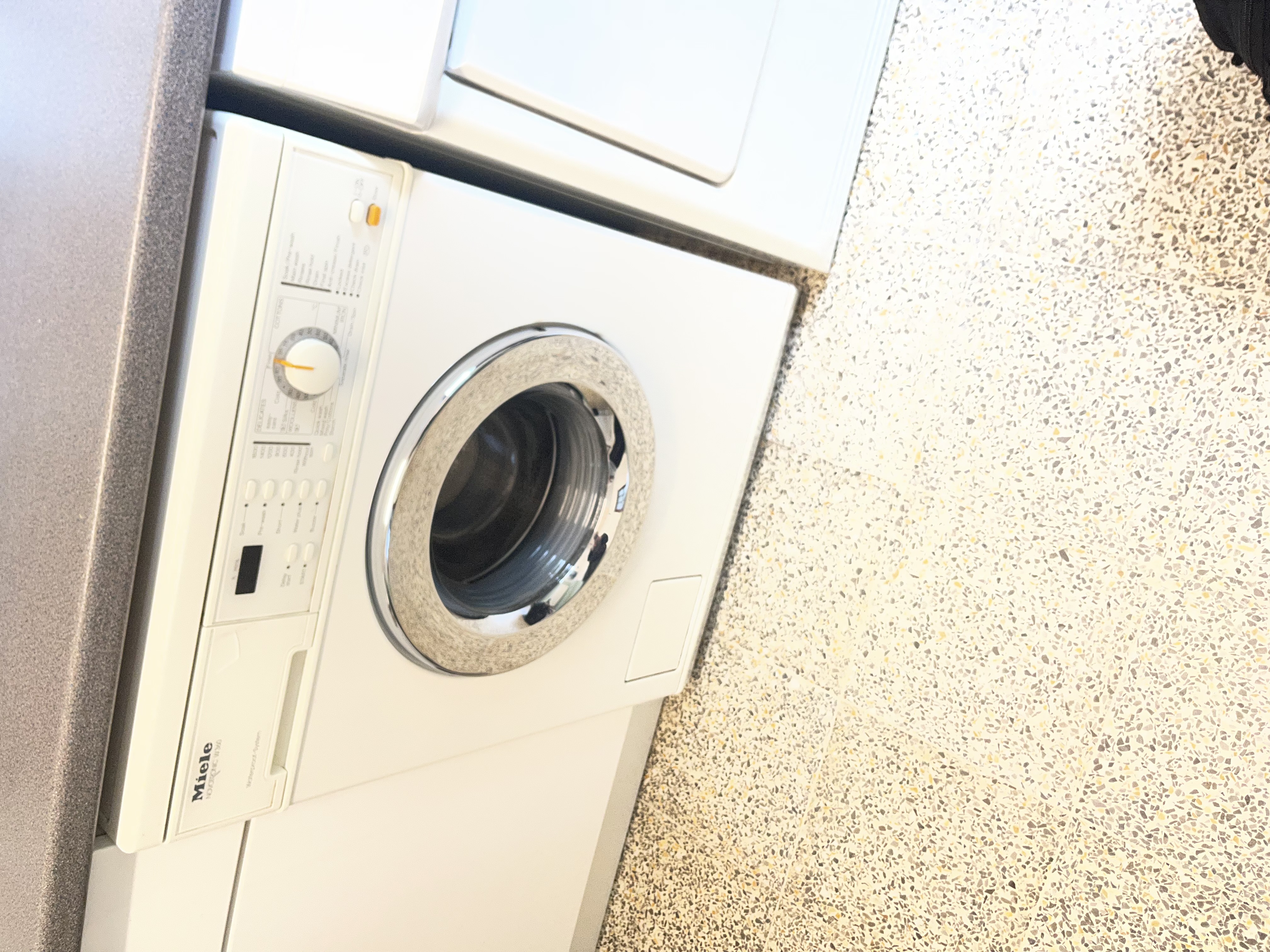
If your washing machine drum is hard to turn by hand, it's worth pausing before you put another load on. A drum that spins freely with a light push is normal. One that feels stiff, grinds, scrapes or only rotates part of the way is telling you something is wrong, and the fix can range from a five minute job to a fairly involved repair.
The good news is you can narrow down the likely cause yourself with a few simple checks. Below we walk through what a stiff drum usually means, how to tell a jammed object apart from worn bearings, and why running the machine in this state is a gamble worth avoiding.
First, what does "normal" feel like?
With the machine switched off and unplugged, open the door and turn the drum by hand. A healthy drum should rotate smoothly in both directions with a bit of momentum. You might hear the gentle swish of water in the sump or a faint whir from the motor and belt, and that's fine.
What isn't normal:
- The drum stops dead after part of a turn, as if something is blocking it.
- A harsh grinding or scraping noise as it moves.
- A heavy, dragging stiffness through the whole rotation.
- The drum feels loose and drops or knocks against the casing when you push it up and down.
Each of those points to a different cause, so the way it feels matters.
The two most common causes
Most stiff drum complaints come down to one of two things: a foreign object trapped where it shouldn't be, or bearings that are on their way out. They feel quite different once you know what to listen for.
A jammed foreign object
This is the better outcome of the two. Coins, bra wires, hair clips, buttons and small socks have a habit of slipping past the drum seal and falling into the gap between the inner drum and the outer tub. Once something lodges there, it can stop the drum turning fully or cause a grinding scrape as it drags round.
Tell-tale signs of a trapped object:
- The drum turns freely for part of a rotation, then jams at the same point.
- You hear a single rattle or clunk, often near the bottom of the turn.
- It may have started suddenly rather than getting gradually worse.
Shine a torch through the holes in the inner drum and rotate it slowly. Sometimes you can spot a wire or coin wedged at the back. A bra underwire is the classic culprit and can be surprisingly tricky to retrieve without removing parts.
Worn or collapsed bearings
Drum bearings let the inner drum spin thousands of times per wash. Over years of use, and especially if the drum seal has been leaking water onto them, they wear down. Failing bearings make the drum feel rough, heavy and noisy rather than blocked.
Clues that point to bearings:
- A rumbling or grinding noise that's worse on a fast spin.
- The drum feels stiff and gritty through the whole turn, not just one spot.
- Play in the drum: grab it at the top and try to wobble it up and down or side to side. Movement and a knocking sound usually mean the bearings have gone.
- Brown or rusty staining around the drum or on the door seal, a sign water has been getting where it shouldn't.
Worn bearings rarely fail overnight. They tend to get louder and stiffer over weeks or months, so people often describe a machine that's been "getting noisier" before it became hard to turn.
Rule out the motor and belt
If your machine has a belt driving the drum, that's a quick thing to check. A belt that's slipped off, stretched or snapped won't make the drum stiff by itself, but a seized motor or a tight belt path can add resistance.
With the power off and the machine unplugged, take off the back panel and look at the belt around the drum pulley. If the belt is in place, slip it off the pulley and try turning the drum again by hand.
- If the drum suddenly turns freely with the belt removed, the resistance was coming from the motor or transmission rather than the drum itself.
- If the drum is still stiff or grinding with the belt off, the problem is inside the tub, which points back to a jammed object or the bearings.
This one test separates a drum fault from a drive fault, and it's the step a lot of people skip.
Why running it anyway is risky
It's tempting to start a cycle and hope it frees itself. We'd advise against it.
If there's a foreign object trapped, forcing the drum to spin can score the stainless steel, tear the door seal or damage the heating element sitting at the bottom of the tub. A small repair can turn into a bigger one.
If the bearings have collapsed, spinning at speed puts the drum off balance. That extra movement can wreck the drum spider, the shaft and the seal, and in the worst cases the drum starts hammering against the outer casing. Carry on and you risk turning a bearing job into a write off.
So if the drum is hard to turn by hand and you can't see an obvious object to remove, the safest move is to stop using it.
Jammed object or bearings? A quick comparison
| Symptom | Likely jammed object | Likely worn bearings |
|---|---|---|
| When it stiffens | At one point in the turn | Throughout the whole turn |
| Noise | Single rattle, scrape or clunk | Rumbling, grinding, worse on spin |
| Onset | Often sudden | Gradual, getting louder over time |
| Drum wobble | Usually none | Noticeable up and down play |
| Staining | Not usually | Rusty marks near seal or drum |
When to call in an engineer
Fishing out a coin you can see and reach is one thing. Bearing replacement is another. On many modern machines the outer tub is sealed, which means the whole tub assembly has to come out and, on some models, be split or replaced entirely. It's labour intensive and needs the right tools, so it's not a job we'd send most people into blind.
Because the two causes can feel similar and the repair routes are so different, a proper diagnosis saves you guessing. One of our engineers can confirm whether it's a trapped object, a bearing failure or a drive problem, and tell you what's actually worth doing.
With NAC you'll get a service charge quoted before an engineer attends, and that covers all the labour, the callout and VAT where it applies. The only thing on top is parts, and if any are needed we quote those separately and get your go-ahead before any work starts. There's no extra labour charge added later. Repairs are backed by a guarantee too, with the length depending on the parts fitted and covered under our terms and conditions.
We repair every major make, so whether it's a Hoover, Bosch, Hotpoint, Samsung or anything else, take a look at the brands we repair and book a repair or get in touch. If you'd rather understand the full range first, our services page lays it out, and you can check we cover your postcode on our service areas page.
A stiff drum rarely fixes itself. Catch it early and you've usually got more options, so it's worth sorting sooner rather than later.
- washing machine
- stiff drum
- bearings
- diagnosis
Rather leave it to us?
- Fixed-price quote before any work starts
- Same or next-day visits where available
- UK-wide engineer coverage