











Ducted vs Recirculating Cooker Hoods: Which Is Better?
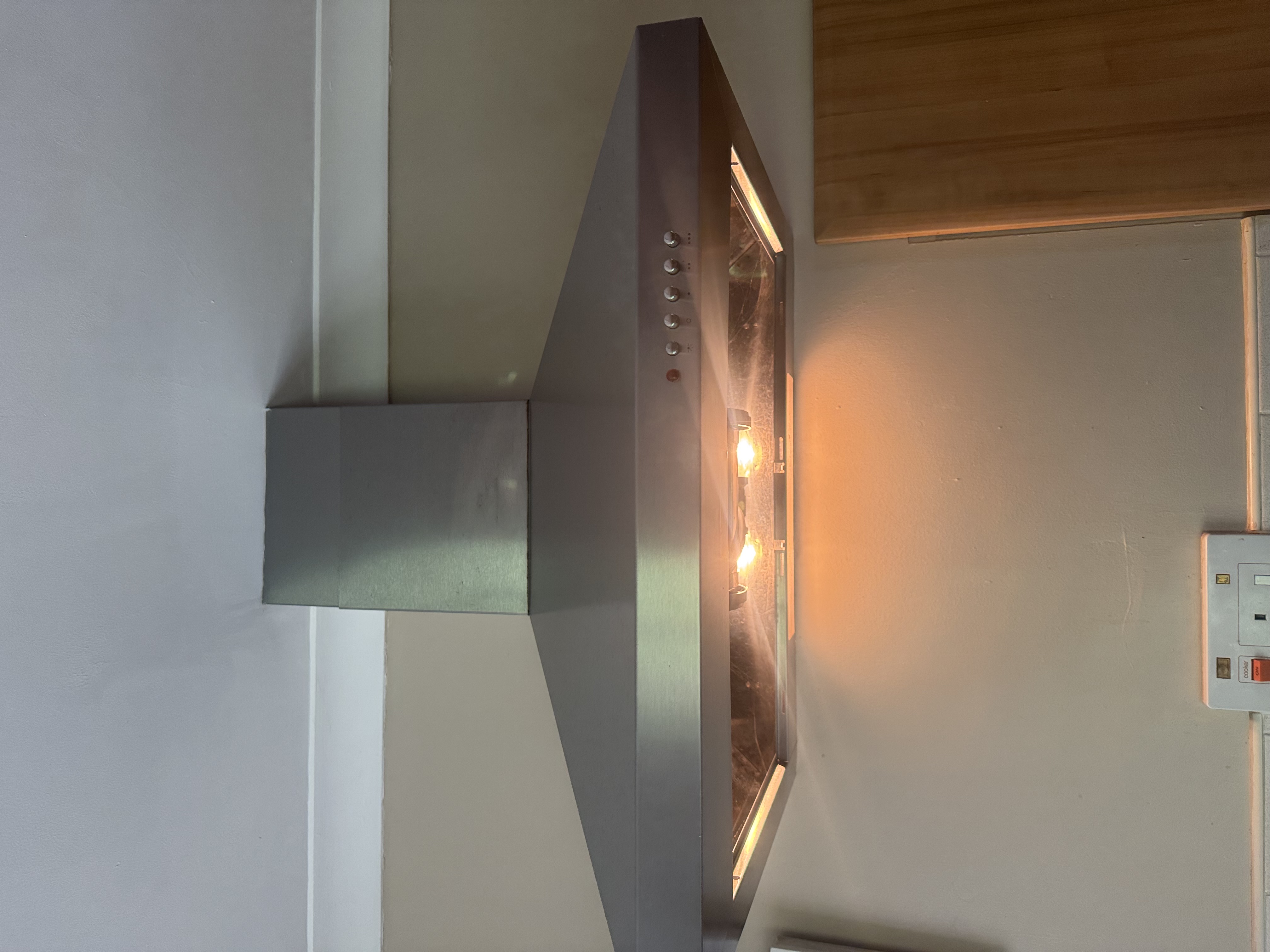
If you've ever wondered why a neighbour's cooker hood has a carbon filter and yours doesn't, or why some hoods vent straight through the wall while others just blow air back into the room, you've stumbled on the ducted vs recirculating cooker hood question. It's worth understanding, because the answer changes how you clean your hood, what you'll need to replace over time, and how well your kitchen actually clears steam and cooking smells.
Here's a plain explanation of how each type works, what the upkeep looks like, and how to keep yours running properly.
The basic difference
A ducted hood (sometimes called an extraction hood) pulls greasy, steamy air up through the hood and pushes it outside through ducting. The air leaves your home altogether. Because the air is being expelled, there's no need to scrub it clean of odours first, so these hoods don't rely on a carbon filter.
A recirculating hood can't send air outside, usually because there's no practical route for ducting. Instead it draws the air in, passes it through a carbon filter to strip out odours, and then blows the cleaned air back into the kitchen. The carbon filter is doing the heavy lifting here, which is why recirculating hoods have one and ducted hoods generally don't.
That single design decision explains nearly everything about how you maintain your hood.
Ducted hoods: the pros and cons
Ducted extraction tends to be the more effective option for clearing steam, heat and smells, because it removes the air entirely rather than recycling it. Once the grease filters are in place, there's very little ongoing consumable cost.
Where they work well:
- Kitchens with an outside wall or an existing duct route
- Heavy or frequent cooking, where you want steam and smells gone for good
- Anyone who'd rather not buy replacement filters regularly
The trade-offs:
- You need somewhere for the ducting to run, which isn't always possible
- Installation can be more involved
The filters you'll deal with on a ducted hood are the metal gauze ones (more on cleaning those below), and that's usually the extent of the routine maintenance.
Recirculating hoods: the pros and cons
Recirculating hoods are the flexible choice. With no need to vent outside, they can go almost anywhere, which makes them popular in flats, island installations and kitchens where running a duct just isn't realistic.
Where they work well:
- Kitchens with no external wall or sensible duct route
- Island hoods and awkward layouts
- Situations where you can't alter the building structure
The trade-offs:
- They're generally less effective at shifting steam and heat than ducted extraction
- The carbon filter is a consumable, so there's an ongoing replacement cost
- A neglected carbon filter can drag down performance and even strain the motor
That last point matters more than people realise. A carbon filter can't be washed or revived. Once it's saturated, it has to be swapped out, and a clogged one can cause problems for the motor itself.
So which is better?
There's no single winner. If you have the option to duct outside and you cook a lot, ducted extraction usually gives you the cleanest air with the least fuss over filters. If ducting isn't an option for your kitchen, a recirculating hood is a perfectly sensible choice, you just need to stay on top of the carbon filter.
In short: pick ducted for performance where you can run a duct, and recirculating for flexibility where you can't.
Understanding your hood's filters
Whichever type you have, the filters are the part you'll interact with most. There are three you might come across.
Metal gauze filters
Most extractors and cooker hoods have two or three metal gauze filters. These catch grease before it reaches the motor and ducting.
- To remove them, push down on the sprung-loaded catch on either side to release the tabs. The filter will then drop out.
- Stainless steel mesh filters clean up extremely well in a dishwasher, so they're easy to look after.
- You don't need to put them back in any particular order, because they each fit in different positions.
Giving these a regular dishwasher cycle keeps airflow strong and stops grease building up where you don't want it.
Carbon filter
This is the one that defines a recirculating hood. It sits on the motor section of the cooker hood.
- To remove it, turn it a quarter of a turn and it will pop out.
- Carbon filters cannot be cleaned or maintained. When they become saturated, they need replacing.
- A saturated carbon filter can cause issues for the motor itself, so don't leave it.
- Not every cooker hood or extractor has one. If yours doesn't, it's almost certainly a ducted model.
If your extractor isn't working as efficiently as it used to, it's well worth checking whether the carbon filter is saturated. If it is, fit a fresh one and see how you get on.
Paper gauze filters
Older extractor fans and cooker hoods often use these. On those units, the removable panels usually come in two halves with a paper gauze filter sandwiched in between.
- They become saturated over time and are easy to replace.
- You can buy paper gauze in large sheets and cut it down to the size you need.
A quick reference for cleaning and replacing filters
| Filter type | Found on | Clean or replace? | How to remove |
|---|---|---|---|
| Metal gauze | Most hoods (ducted and recirculating) | Clean in a dishwasher | Push down the sprung catch each side to release the tabs |
| Carbon | Recirculating hoods, on the motor section | Replace when saturated (cannot be cleaned) | Turn a quarter turn and it pops out |
| Paper gauze | Older units, between two-halved panels | Replace when saturated (cut from a sheet) | Open the panel halves and lift out |
While you're in there: lightbulbs
Many hoods have a built-in light, and bulbs do eventually go. The good news is that changing a cooker hood bulb uses exactly the same method as changing a fridge or cooker bulb. We've covered both in detail, so have a look at how to change an oven light bulb and how to change a fridge light bulb safely at home. If you swap the bulb and the light still doesn't work, our guide on the oven light not working after changing the bulb goes through the usual causes.
Before any hands-on work, it's sensible to read how to safely isolate an appliance before a DIY repair.
When to call an engineer
Filter cleaning and bulb changes are straightforward jobs most people can manage at home. But if your hood is struggling to clear steam even with clean filters, making odd noises, or the motor isn't behaving, that points to something beyond routine upkeep.
NAC engineers are fully trained across all makes of cooker hood and extractor, whether yours is ducted or recirculating. We quote a service charge before an engineer visits, and that covers all labour, callout and VAT where it applies. If parts are needed, we quote those separately before any work goes ahead, with no extra labour charge on top. Repairs come with a guarantee, the length of which depends on the parts fitted and is set out in our terms and conditions.
To get yours sorted, use the Book A Repair button on our website or call us on 0333 016 9622. You can also get in touch here or check whether we cover your area.
- cooker hood
- ducted
- recirculating
- buying advice
Rather leave it to us?
- Fixed-price quote before any work starts
- Same or next-day visits where available
- UK-wide engineer coverage