












How to Change the Bulb Inside Your Fridge
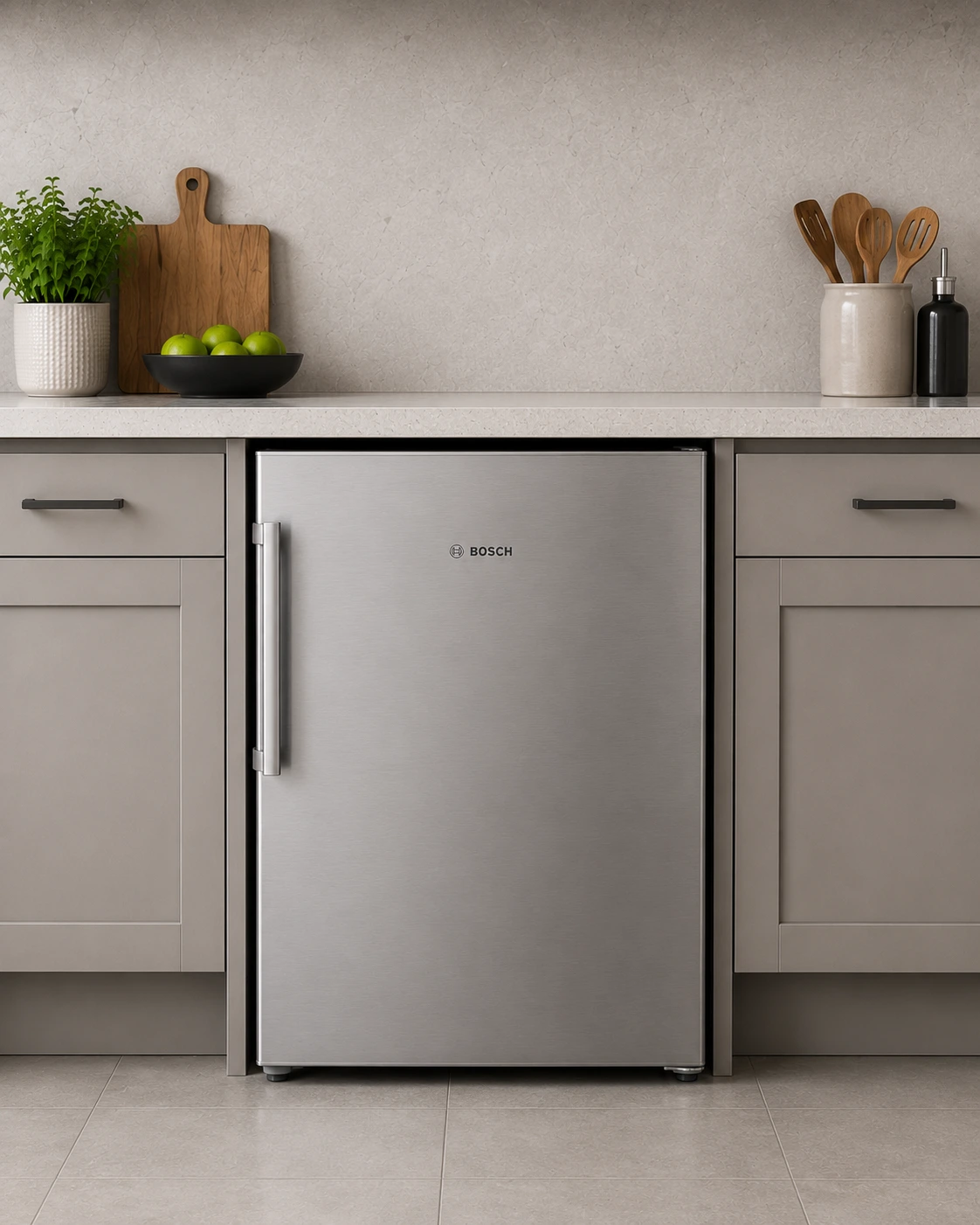
Open the fridge door, reach for the milk and... nothing. No friendly glow, just a dark shelf you're squinting into. A dead fridge light is one of the more common little annoyances in the kitchen, and the good news is that you can usually change a fridge bulb yourself in a few minutes. This guide walks you through doing it safely, picking the right replacement, and knowing when a stubborn light points to something an engineer needs to sort.
First, check it's actually the bulb
Before you go hunting for a spare bulb, rule out the obvious. A fridge light not working isn't always a blown bulb.
- Is the fridge running? If the appliance is dead with no hum, no cooling and no light, you may have a power or supply issue rather than a bulb fault. Check the plug, socket and fuse first.
- Does the door switch work? Most fridges turn the light off when the door closes, using a small push switch by the hinge. Press and release that switch by hand with the door open. If the light stays off when you press it, and your bulb looks fine, the switch could be the culprit.
- Is the bulb loose? Sometimes a bulb just works itself slightly loose over time. Worth a gentle check before you write it off.
If the rest of the fridge is humming away happily and only the light has gone, a new bulb is the likely fix.
Isolate the power before you start
This is the part people are tempted to skip, and it's the one part you really shouldn't. You'll be putting your fingers near a live electrical fitting, so switch the fridge off at the wall and pull the plug out before you touch the light. Don't rely on the door switch to keep the circuit dead.
If you want a proper run-through of doing this safely, we've covered it here: How to Safely Isolate an Appliance Before a DIY Repair.
While the power's off, give the old bulb a minute to cool if the fridge has been running, then you're good to go.
How to change a fridge bulb, step by step
The exact layout varies between makes and models, but the method is much the same across the board.
- Empty the immediate area. Move any food or shelves that sit around the light housing so you've got room to work and nothing topples out.
- Find the bulb. It's usually behind a small plastic cover, often near the top of the fridge compartment or set into the back or side wall. Some fridge freezers have a light in the freezer side too, though many don't.
- Remove the cover. Most covers either unclip with gentle pressure or slide off. Look for a small lip or tab you can press. Take your time, as cold plastic can be a little brittle. If there's a screw, undo it and keep it somewhere safe.
- Take out the old bulb. Traditional fridge bulbs unscrew anti-clockwise, just like a normal light bulb. Some newer fridges use a push-fit or bayonet-style bulb, or a small LED unit, so look at how it sits before forcing anything.
- Check what you've removed. Note the fitting type and, if it's printed on the bulb or the housing, the wattage and voltage. Take the old bulb with you when buying a replacement, or photograph the markings.
- Fit the new bulb. Screw or clip the matching bulb into place. Don't overtighten, just nip it up snug.
- Refit the cover and replace anything you moved.
- Plug back in, switch on and test. Open the door and check the light comes on, then press the door switch to confirm it goes off again.
Choosing the right replacement bulb
The single biggest cause of a new bulb not working is buying the wrong one. A few pointers:
- Match the fitting. Screw fittings and bayonet caps come in different sizes. The replacement has to physically match what came out.
- Match the voltage and wattage. Use the ratings marked on the old bulb or in your appliance handbook. Going over the rated wattage can overheat the fitting.
- Use an appliance-rated bulb. Fridge bulbs are made to cope with the cold and the damp inside the cabinet. A standard household bulb isn't always suitable, so look for one sold specifically for fridges or appliances.
- LED options exist. Many fridges now use sealed LED modules. If yours has one of these rather than a replaceable bulb, you generally can't just swap a bulb, and the whole unit may need changing by an engineer.
If you've fitted a brand new bulb and it still won't light, the same troubleshooting we use for ovens applies to fridges too. Our guide on an oven light not working after changing the bulb explains the usual reasons a fresh bulb stays dark, and most of it carries straight over.
When it's not the bulb: switch or wiring faults
If you've isolated the power, fitted the correct new bulb, and the light still won't come on, the bulb probably wasn't the problem. The likely suspects then are:
- A faulty door switch. If the switch doesn't release properly when the door opens, the light never gets told to come on. A sticking or failed switch is a common cause.
- Wiring or connection issues. A broken wire, a corroded connection or a problem on the control side can all leave a healthy bulb in darkness.
- A failed LED light module on models where the light isn't a separate replaceable bulb.
These aren't really DIY jobs. Diagnosing a switch or wiring fault means testing the circuit safely and getting at parts that aren't designed to be poked at by hand. That's exactly the sort of thing our engineers do day in, day out.
While you've got the fridge open
A bulb change is a good moment to give the inside a quick once-over. Two things worth checking:
- The drain hole. A blocked fridge drain leads to pooling water and damp at the bottom of the cabinet. Here's how to clear it: How to Clear a Blocked Fridge Drain Hole.
- The temperature. If your fridge has been struggling, it's worth confirming it's set correctly. We cover the ideal numbers in How to Set the Correct Fridge Freezer Temperature.
When to call NAC
If the light won't come on with a new bulb, if you've got a sealed LED unit, or if the fridge itself isn't behaving (no power, a noisy compressor, food not chilling properly, or the freezer constantly icing up), it's worth getting a professional eye on it rather than chasing the fault yourself.
NAC is a family run business with engineers trained across all the major makes and appliances, so we can repair pretty much any fridge or fridge freezer, whatever the brand. We quote a service charge before an engineer attends, covering all labour, callout and VAT where it applies. The only possible extra is parts, and we'll always quote those separately and get your okay before fitting anything. Every repair comes with a guarantee, with the length depending on the parts used.
To book, give us a ring on 0333 016 9622 or get in touch here. Same and next day repairs are available where possible, and you can see the brands we repair if you want to check we cover your appliance.
- fridge bulb
- diy repair
- fridge maintenance
- lighting
Rather leave it to us?
- Fixed-price quote before any work starts
- Same or next-day visits where available
- UK-wide engineer coverage