












How to Change a Fridge Light Bulb Safely at Home
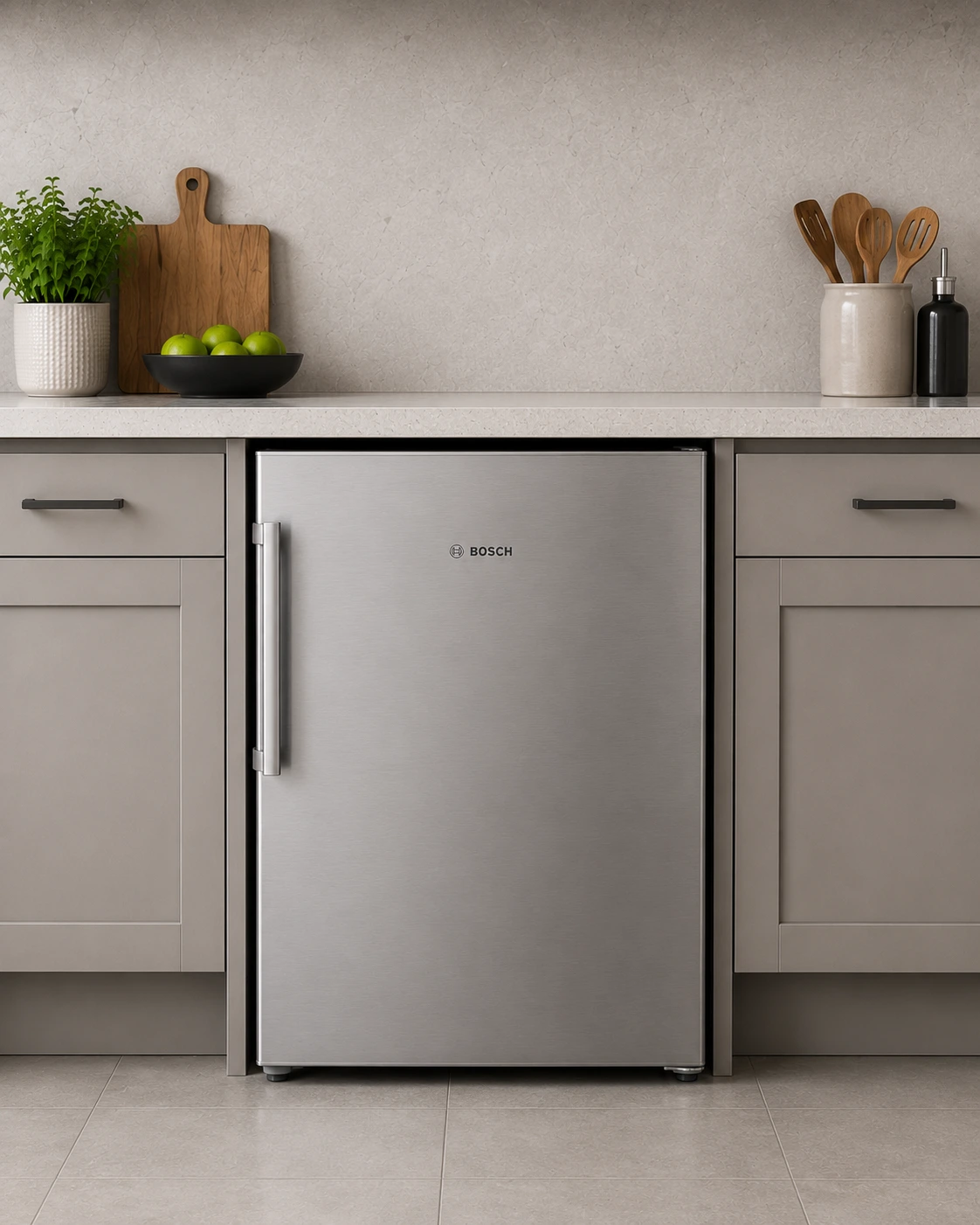
If the inside of your fridge has gone dark every time you open the door, the interior bulb has most likely blown. The good news is that learning to change a fridge light bulb is one of the simpler jobs you can do yourself, and you can usually have it sorted in a couple of minutes once you have the right replacement to hand.
This guide walks you through it step by step, from isolating the power and finding the lamp behind its cover, to fitting the correct bulb and checking it works. We'll also explain when a fridge that stays dark points to something more involved, like a faulty door switch or control board, which is a job for an engineer rather than a new bulb.
Why the fridge light matters
It's easy to dismiss the interior light as a small thing, but it earns its keep. A working bulb lets you:
- See the contents clearly the moment you open the door.
- Find what you need quickly without rummaging around in the dark.
- Spot spills, leaks or food that's past its best.
Your fridge will still cool perfectly well without a working light, so it isn't an emergency. It just makes everyday life that bit more awkward, and a dark fridge can sometimes be the first clue to a different fault, which we'll come to later.
Can you use any bulb?
No. Just as ovens need a special heat-resistant bulb, fridges take their own specific type of low-wattage bulb designed for the cold, damp environment inside. A standard household bulb from a light fitting is not the right fit.
The safest approach is to buy the correct bulb for your exact appliance model from a trusted appliance spares supplier. Your user manual will list the bulb type and wattage your fridge needs, so check this before you order. Fitting the wrong bulb can mean it doesn't sit properly in the holder, doesn't light at all, or simply won't last.
Before you start: safety first
There's very little to a bulb change, but you're still working around electrics, so take a moment to make it safe.
- Isolate the power. Unplug the fridge at the wall socket. If your appliance is hardwired or built in, switch it off at the isolator switch and turn off the relevant fuse in your fusebox.
- Wear protective gloves. They give you extra grip and protect your hands if the glass bulb were to break.
- Have a clear workspace. Move any food or shelves out of the way so you can see and reach the lamp easily.
How to change a fridge light bulb
1. Gather your tools
You'll need the correct replacement bulb for your model, and possibly a screwdriver if the lamp cover is held in place with screws. Gloves are well worth wearing, as mentioned above.
2. Locate the bulb
The light is usually near the top of the fridge compartment, or sometimes set into the side wall. If you can't find it, your user manual will show exactly where it sits.
3. Remove the cover
Most fridges have a plastic cover protecting the bulb. Depending on the design, this either:
- Unclips by hand, or
- Unscrews (turn a glass cover counterclockwise), or
- Is held by screws, in which case use a screwdriver to remove them.
If you remove any screws, set them aside somewhere safe. You'll need them again when you refit the cover.
4. Remove the old bulb
With the bulb exposed and your gloves on, take out the old one:
- For a screw-fit bulb, turn it counterclockwise to unscrew it.
- For a push-and-turn (bayonet) bulb, gently push it in while turning counterclockwise, then ease it out.
5. Fit the new bulb
Using light pressure, screw or push the new bulb into the holder until it's fully seated and secure. Don't force it. It should go in easily if it's the correct type.
6. Replace the cover
Return the cover to its original position. Clip it back, screw a glass cover clockwise until secure, or refit the screws you set aside.
7. Test it
Plug the fridge back in (or restore power at the fuse and isolator) and open the door. The new bulb should light straight away.
What if the new bulb still won't light?
First, go back over the steps. Make sure the bulb is fully seated, the power is properly restored, and you've fitted the right type for your model.
If you've fitted a known-good bulb correctly and it still stays dark, the bulb probably wasn't the original problem. On a fridge, that usually points to one of two things:
- A faulty door switch. This is the little button or sensor the door presses when it closes. It tells the light to come on when the door opens. If the switch has failed, the bulb won't light even though it's perfectly good.
- A control board or wiring fault. Less common, but a problem on the board or in the lamp circuit can stop power reaching the bulb altogether.
Both of these are diagnostic jobs rather than DIY fixes, and they're exactly the kind of thing our engineers sort out every day. While they're testing the lamp circuit, it's also worth them checking the fridge over if you've noticed any other niggles, such as no power, a noisy compressor, food not chilling properly or a freezer that keeps filling up with ice.
Get it fixed by NAC
If the light won't come back to life after a fresh bulb, or your fridge is showing any other signs of trouble, our engineers can diagnose and repair it for you. We repair all makes and models, and we'll quote a clear service charge before anyone attends. That charge covers all labour, callout and VAT where applicable, so the only possible extra is for parts, which we'll always quote separately and agree with you before any work goes ahead. Every repair comes with a guarantee under our terms and conditions.
Book a fridge repair or get in touch and tell us what your appliance is doing. You can also see the full range of repairs we cover and check we serve your area.
Replacing a fridge bulb is genuinely one of the easiest appliance jobs there is. Take the power off first, fit the correct bulb, and test it. If the light still won't come on, that's our cue to step in.
- fridge bulb
- fridge light
- DIY repair
- fridges
Rather leave it to us?
- Fixed-price quote before any work starts
- Same or next-day visits where available
- UK-wide engineer coverage