












How to Set the Right Fridge Freezer Temperature
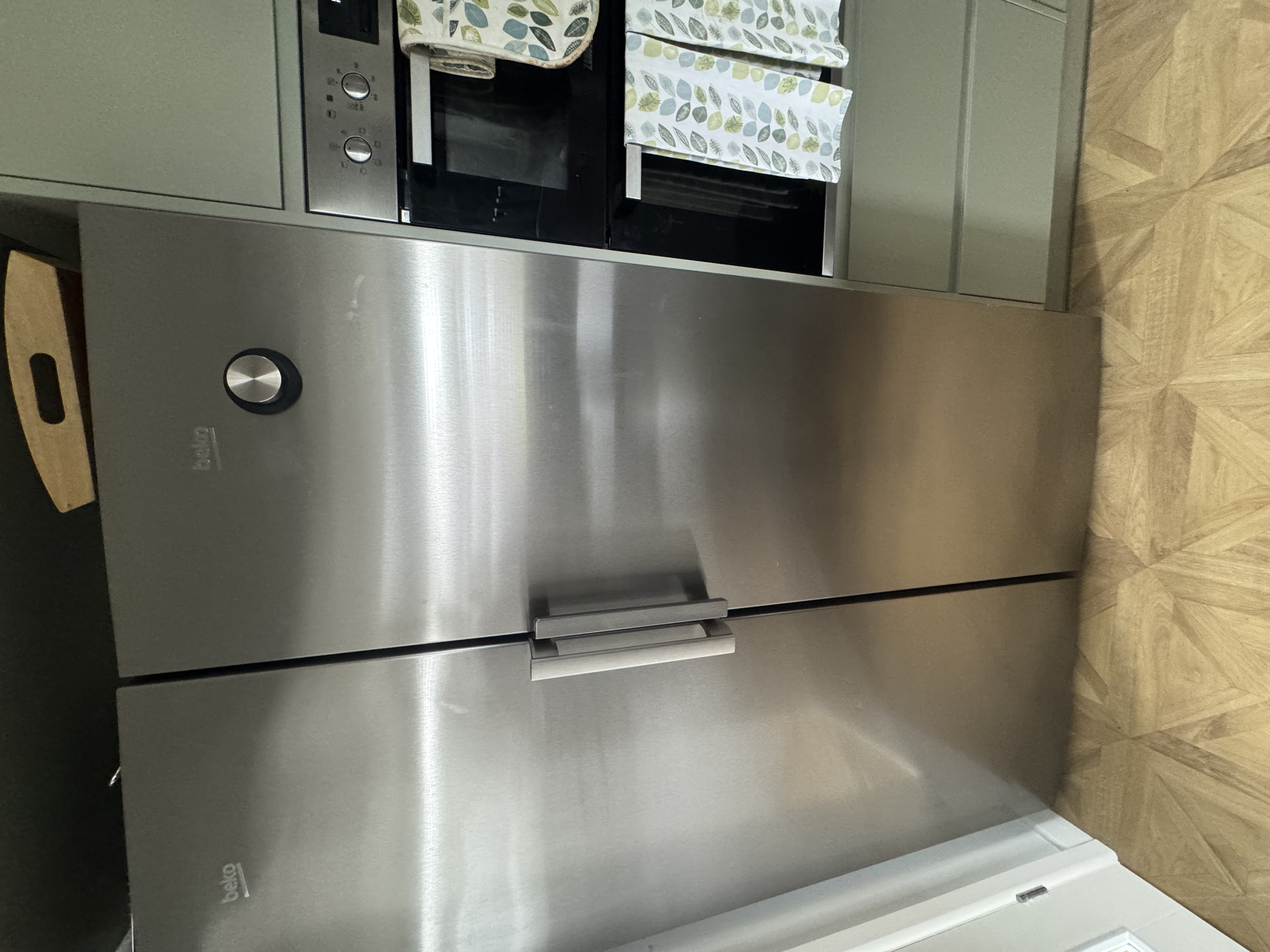
Getting your fridge freezer temperature right is one of those small jobs that quietly protects your food, your weekly shop and your peace of mind. Set it too warm and your milk turns before its date. Set it too cold and you end up with frozen salad and lettuce that crunches in the wrong way. This guide walks you through the correct fridge temperature setting, the ideal freezer temperature, and how to adjust both whether you have an old-fashioned dial or a modern digital display.
What temperature should a fridge be?
For safe food storage, aim to keep your fridge between 3 and 5°C. That range slows down the bacteria that spoil food without freezing anything you don't want frozen. Many people set theirs slightly lower in summer when the kitchen is warm and the door gets opened more often.
Your freezer should sit at -18°C. At that temperature food stays frozen solid and safe for long-term storage. There's no real benefit to going colder, and a much lower setting just uses more electricity for no gain.
| Compartment | Recommended temperature |
|---|---|
| Fridge | 3 to 5°C |
| Freezer | -18°C |
How fridge freezer controls work
Before you start twiddling anything, it helps to know what kind of control you have, because they behave very differently.
Dial controls
Older and budget models usually have a numbered dial, often running from 1 to 5 or sometimes higher. The important thing to understand is that the number is not a temperature. It's a setting for the thermostat, where a higher number means colder, not warmer. So turning the dial up to its highest setting makes the fridge work harder and run colder.
If your food is spoiling quickly, nudge the dial up a number and give it a day to settle. If things are freezing at the back, drop it down a notch. Small adjustments are the trick here, then wait and check rather than swinging from one extreme to the other.
Digital controls
Newer fridge freezers let you set the actual temperature in degrees, either on a panel inside the fridge or on the door. You simply press the up or down buttons until the display reads the figure you want, 4°C for the fridge and -18°C for the freezer being a sensible starting point.
Some digital models have separate controls for each compartment, which is genuinely useful. Others share a single thermostat, so cooling the fridge harder also affects the freezer. Check your handbook if you're not sure which you have.
Where to put a thermometer to check the real temperature
The number on the dial or display is a guide, not gospel. The only way to know what's actually going on inside is with a simple fridge thermometer, and they cost very little.
- Stand a small glass of water in the middle of the fridge, drop the thermometer in and leave it overnight. Reading the temperature of water rather than air gives you a far more accurate picture, because air temperature swings every time the door opens.
- For the freezer, place the thermometer between two packs of frozen food and leave it for a few hours.
- Take your readings first thing in the morning before the door has been opened, then adjust the controls if you're outside the ranges above.
It's worth checking again after any big change, like restocking after a shop or moving the appliance.
Habits that keep the temperature stable
Even a perfectly set fridge struggles if it's working against you. A few simple habits make a real difference:
- Don't overfill or pack it solid. Cold air needs to circulate. Cram everything in and the items at the back chill while the front stays warm.
- Let hot food cool before it goes in. Putting a warm casserole straight into the fridge raises the internal temperature and makes the compressor work overtime.
- Keep the door closed. Sounds obvious, but lingering with the door open lets warm kitchen air flood in. Decide what you want before you open it.
- Check the door seals. Run your hand around the gasket. If you can feel cold air escaping, or a sheet of paper slips out easily when the door is shut on it, the seal may need attention.
- Give it breathing room. Leave a gap behind and above the appliance so heat can escape from the back. A fridge jammed into a tight alcove runs warmer than it should.
Signs your temperature is set wrong
The food usually tells you before the thermometer does. Watch out for:
- Milk, meat or leftovers going off well before their use-by date (fridge too warm).
- A build-up of condensation or pooled water inside the fridge.
- Salad, vegetables and drinks freezing at the back of the fridge (fridge set too cold, or the thermostat is faulty).
- Soft ice cream or partly thawed freezer items (freezer too warm).
- Heavy frost or ice building up faster than usual.
Many of these are simply a matter of adjusting the dial or display and waiting a day to see the result. Pooling water in particular can also point to a blockage rather than a setting problem, and our guide on how to clear a blocked fridge drain hole walks you through that.
When it's a fault, not a setting
If you've set the controls correctly, checked with a thermometer and given the appliance a full day to respond, but the temperature still won't behave, the problem is more likely mechanical. Common culprits include a failing thermostat, a tired door seal, a faulty compressor or a fridge that's constantly filling with ice.
Typical signs that you're looking at a repair rather than a tweak:
- No power at all, or the appliance keeps cutting out.
- A noisy compressor that drones, rattles or never seems to switch off.
- Food that simply won't chill properly however you set the controls.
- A freezer constantly filling with ice no matter how often you defrost it.
That's where we come in. NAC engineers repair fridge freezers of every make, returning them to a like-new level of cooling. We quote a clear service charge before an engineer attends, covering all the labour, the callout and VAT where it applies. If any parts are needed we'll quote those separately and get your approval first, with no extra labour charge on top. Repairs are guaranteed too, with the length depending on the parts fitted and covered under our terms and conditions.
While you've got the fridge open, you might also fancy our guide on how to change a fridge light bulb safely.
Book a fridge freezer repair
If your fridge or freezer won't hold the right temperature and a setting change hasn't fixed it, don't risk a whole fridge of spoiled food. Get in touch with NAC or call us on 0333 016 9622 to book a repair. Run by husband and wife team Adrian and Amanda with over 40 years in the trade, we cover all the major brands. You can check our service areas to see that we cover you, and browse the brands we repair for peace of mind.
- fridge freezer
- temperature
- settings
- food safety
Rather leave it to us?
- Fixed-price quote before any work starts
- Same or next-day visits where available
- UK-wide engineer coverage