











Washing machine tripping the electrics? What it means and what to do
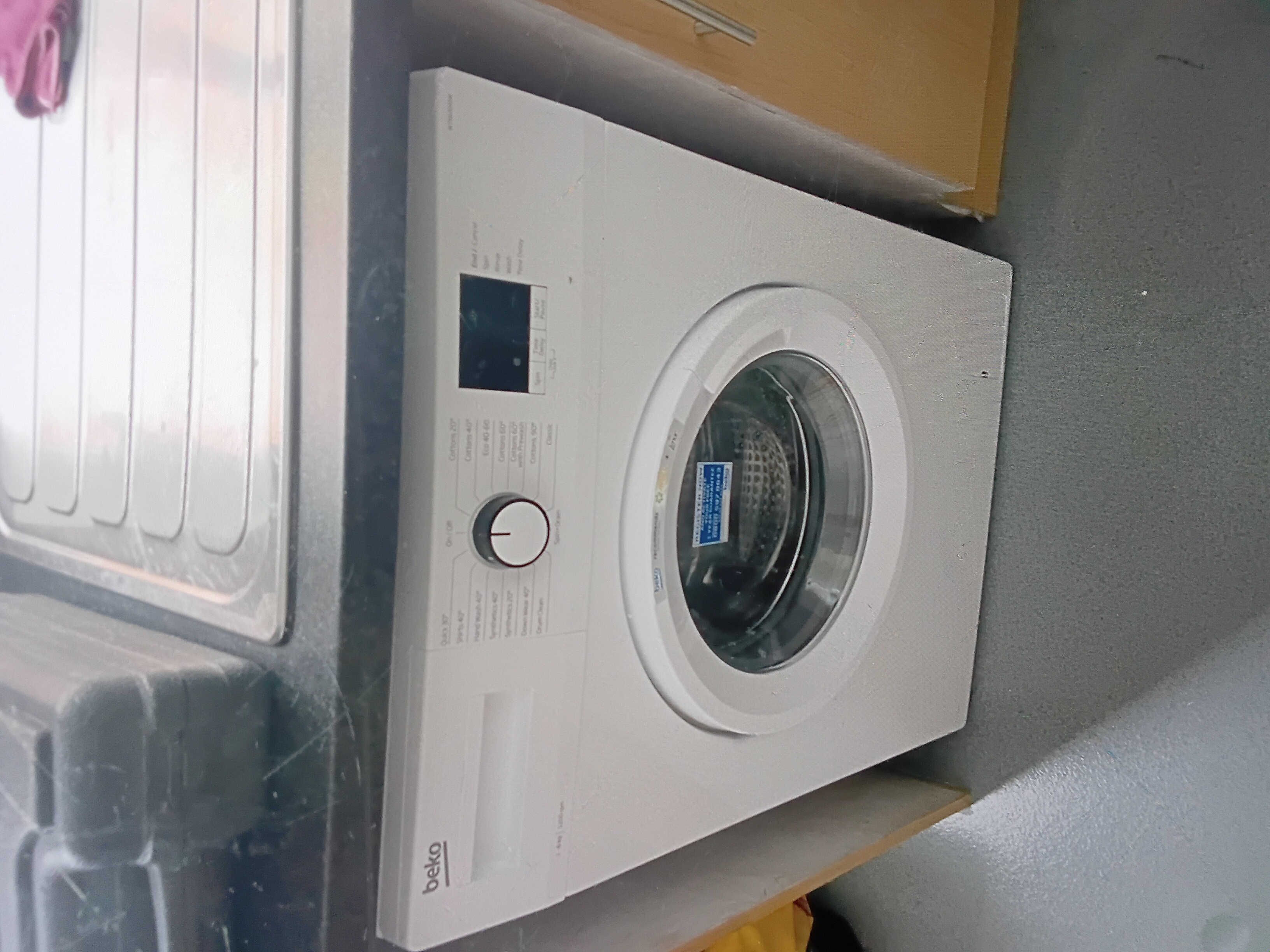
A washing machine that trips the power the second it starts, or halfway through a wash, is one we'd ask you not to keep resetting. That trip is the machine's safety and your home's safety doing exactly what they're built to do. Here's what's usually behind it, and why it's a job for an engineer rather than the kitchen table.
Stop and read this first
If your machine trips the RCD or the fuse box, stop using it. Don't keep flicking the switch back and running it again. The trip is protecting you from a fault that's letting electricity go where it shouldn't. Pull the plug out, and if putting the switch back takes the whole board down, leave that circuit off.
What tripping to earth actually means
An RCD cuts the power when it spots electricity leaking to earth instead of running safely round the circuit. Put that in a machine full of water and the usual culprit our engineers find is a heating element that's broken down inside and is now leaking to earth. The heating element is one of the parts we replace on washing machines. A failing motor, a water-damaged pump, a rubbed-through wire or a faulty mains suppressor will all do the same thing.
The one check worth doing
Try the machine on a different socket on a different circuit. If it trips that one too, the fault is in the machine, not the socket. If it only tripped the first socket, get an electrician to look at the socket and the circuit. That's as far as it's safe to go on your own. Past this point you're working on a mains appliance with a live earth fault.
Why this one needs an engineer
Tracking down an earth leak means testing the element, motor, pump and wiring under load with proper meters, then isolating and swapping the faulty part safely. It's not something to prod at with the machine plugged in. Going on our own jobs, customers typically paid £168 to £248 in total for this repair, including parts and VAT (from 86 repairs), quoted before we start.
Book a washing machine repair
If your machine is tripping the electrics, book a washing machine repair and we'll test it safely and fix the cause. You can also find your local washing machine engineer to check we cover you.
Frequently asked questions
Why does my washing machine keep tripping the electrics?
Usually a fault letting current leak to earth. Most often it's a failed heating element, but a faulty motor, pump, wiring or suppressor can do it too. The RCD trips to protect you.
Is it safe to keep using it?
No. Stop, and don't keep resetting the trip. The RCD has found a real earth fault, and overriding it again and again takes away the protection it's there to give.
Can I fix this myself?
Only as far as trying it on another circuit to confirm the machine is at fault. Finding and replacing the faulty part is mains work and should be left to an engineer.
How much does it cost?
Customers typically paid £168 to £248 in total for this fault, including parts and VAT (from 86 repairs). We confirm a fixed price before any work starts.
What our engineers found on 184 jobs
The figures below come from NAC's own repair records: 184 washing machine jobs our engineers attended for this fault, what they found, what fixed it and what it typically cost.
When a washing machine trips the electrics, the cause our engineers find most often is a failed heating element. Over time the heater can break down so that electricity leaks out of it where it shouldn't, and the safety switch on your fuse board cuts the power. Sometimes the machine trips as soon as it is switched on, and sometimes only once it starts heating water on a hotter wash.
To find the fault, an engineer runs electrical safety checks on the machine and then tests the heater on its own. A useful check is to disconnect the heater and try the machine again. If it no longer trips, the heater is to blame. The engineer also makes sure nothing else, such as the motor or drum, is causing the problem.
The fix is a new heater, sometimes fitted together with the temperature sensor beside it. The heater often has to be ordered, so it is usually fitted at a second visit and then checked with a test wash. Engineers sometimes also find a fault with the socket or the home's wiring, which needs an electrician. Until then, it is safest not to use the machine.
Written by our engineers from these jobs.
- Jobs attended
- 184
- Confirmed repairs
- 91
- This is not a success rate. Jobs inside their 60-day window, jobs still being classified, jobs held for review and visits that didn't end in a repair aren't counted.
- Fixed at the first appointment
- 7%
- about 1 in 15 of our repairs
- Typical total paid by customers
- £168 to £248
- including parts and VAT, from 86 repairs
What's usually behind it
The causes our engineers found and fixed, as a share of our 91 confirmed repairs for this fault.
-
Failed heating element: about 3 in 4 of our repairs, from 68 jobs.
75%
We only list causes with enough repairs behind them, so the shares won't add up to 100%.
Error codes we see with this fault
- Hoover E3: Drain fault.
- Hoover E20: Drain fault, usually a blocked filter or drain.
About the price. £168 to £248 is the typical total paid by customers, including parts and VAT: the middle half of what customers paid on 86 of these repairs. Repairs paid for by manufacturers and insurers aren't counted, because that work is charged at contract rates. It's a guide, not a quote. Your engineer confirms a fixed price before any work starts.
- Washing machine repair
- Washing machines
- Electrical faults
- Safety
- Heating element
Rather leave it to us?
- Fixed-price quote before any work starts
- Same or next-day visits where available
- UK-wide engineer coverage