












Washing machine making a loud noise when spinning? What it means
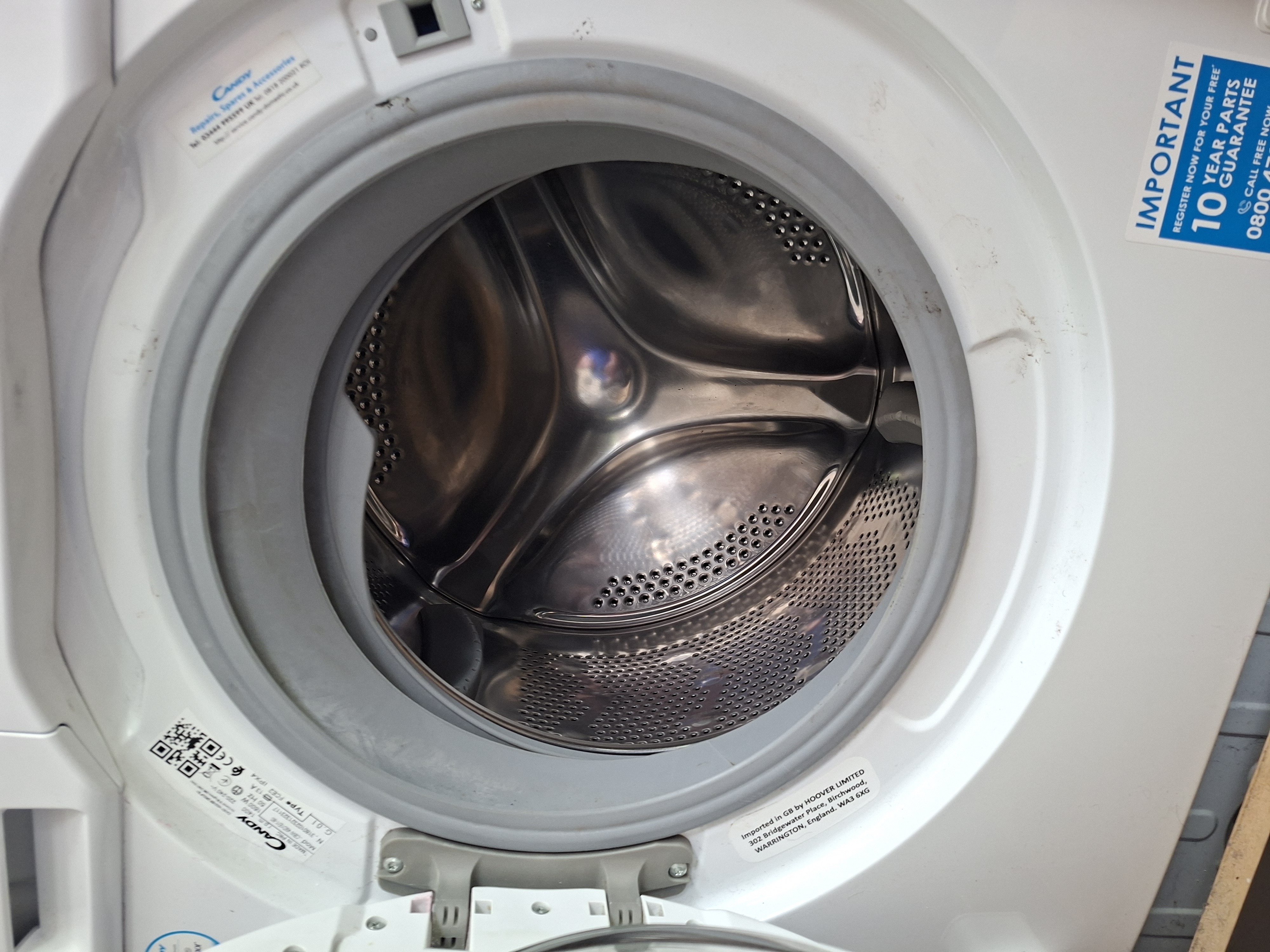
Quiet on the wash, then a racket the moment it hits the spin. A noisy spin covers everything from a coin in the wrong place to worn drum bearings, which is why it has the widest price range of any washing machine fault we see. We attended 881 washing machine jobs for this fault in the last 12 months. Here's how to work out which end of that range you're looking at.
Check the simple things first
Something trapped is the obvious one. A coin, an underwire or a button caught between the drum and the outer tub rattles and grinds exactly like a mechanical fault. Our guide on coins and keys stuck in a washing machine covers getting them out.
While you're there, check the machine is level. One that rocks will bang and walk across the floor on a fast spin, so make sure all four feet are down and locked. If it's a new or recently moved machine, look for the transit bolts in the back. Left in, they make a horrible noise, and they have to come out. And don't cram the drum. Stuff it too full and it can't balance the load, so it thumps as it tries.
What the noise is telling you
Rule those out and the noise usually points one of two ways.
A deep rumble or a grinding that gets worse over a few weeks is the sign of worn drum bearings. This is the bigger job, because it means splitting the drum to reach them, and it's why the price band on this fault runs high.
A buzz, a hot smell, or a spin that's lost its power more often means the motor carbon brushes. They wear down over years of use and are among the parts we replace most. Caught early, new brushes can save the motor.
What it costs
It can be anything from a trapped coin to a bearing change, and customers typically paid £98 to £180 in total, including parts and VAT (from 137 repairs). You'll have a fixed price before any work starts. If it's bearings on an older, cheap machine, we'll tell you straight whether it's worth doing.
Book a washing machine repair
If it's grinding or rumbling and there's nothing trapped, book a washing machine repair or find your local washing machine engineer.
Frequently asked questions
Why is my washing machine so loud on the spin?
Once you've ruled out a trapped object, an unlevel machine and overloading, a grinding rumble usually means worn drum bearings, and a buzzing or gutless spin often means worn motor carbon brushes.
Is it safe to keep using it?
A trapped object or a bit of imbalance is fine to sort and carry on. A grinding that's getting worse isn't. Keep running it and you can damage the drum and shaft further.
How much does it cost?
Customers typically paid £98 to £180 in total, including parts and VAT (from 137 repairs), from lifting out a trapped item to a full bearing change.
Are bearings worth replacing?
On a good machine, often yes. On an old budget one, a bearing job can get close to the price of a new machine, so we'll give you a straight answer before you commit.
What our engineers found on 881 jobs
The figures below come from NAC's own repair records: 881 washing machine jobs our engineers attended for this fault, what they found, what fixed it and what it typically cost.
When a washing machine starts banging, rattling or grinding, the cause our engineers find most often is something that has escaped from the wash. Underwire from a bra, clips from clothing, coins, bits of plastic and even a stray sock can slip between the inner and outer drum or end up in the filter, where they knock against moving parts as the drum turns or the water drains. An engineer will check the drum and the filter, then remove whatever has found its way in, sometimes working it out through the drain at the bottom of the machine. Once it is cleared, they run a wash and a spin to make sure the noise has gone.
The next most common cause is worn shock absorbers. These steady the drum, and when they wear out the drum bounces about on the spin, so the machine knocks, bangs and may even rock or move across the floor. The engineer tests how firmly they hold the drum and watches a spin to confirm where the noise comes from. New shock absorbers often have to be ordered and fitted at a second visit, after which the machine is run again to check it is quiet and steady.
Written by our engineers from these jobs.
- Jobs attended
- 881
- Confirmed repairs
- 141
- This is not a success rate. Jobs inside their 60-day window, jobs still being classified, jobs held for review and visits that didn't end in a repair aren't counted.
- Fixed at the first appointment
- 60%
- about 3 in 5 of our repairs
- Typical total paid by customers
- £98 to £180
- including parts and VAT, from 137 repairs
What's usually behind it
The causes our engineers found and fixed, as a share of our 141 confirmed repairs for this fault.
-
Foreign object: about 2 in 5 of our repairs, from 54 jobs.
38% -
Worn shock absorbers: about 1 in 5 of our repairs, from 28 jobs.
20%
We only list causes with enough repairs behind them, so the shares won't add up to 100%.
Error codes we see with this fault
- LG OE: Drain fault, water not draining from the drum.
- Bosch E18: Drain fault, the machine cannot empty the drum.
About the price. £98 to £180 is the typical total paid by customers, including parts and VAT: the middle half of what customers paid on 137 of these repairs. Repairs paid for by manufacturers and insurers aren't counted, because that work is charged at contract rates. It's a guide, not a quote. Your engineer confirms a fixed price before any work starts.
- Washing machine repair
- Washing machines
- Noise
- Bearings
- Carbon brushes
Rather leave it to us?
- Fixed-price quote before any work starts
- Same or next-day visits where available
- UK-wide engineer coverage